


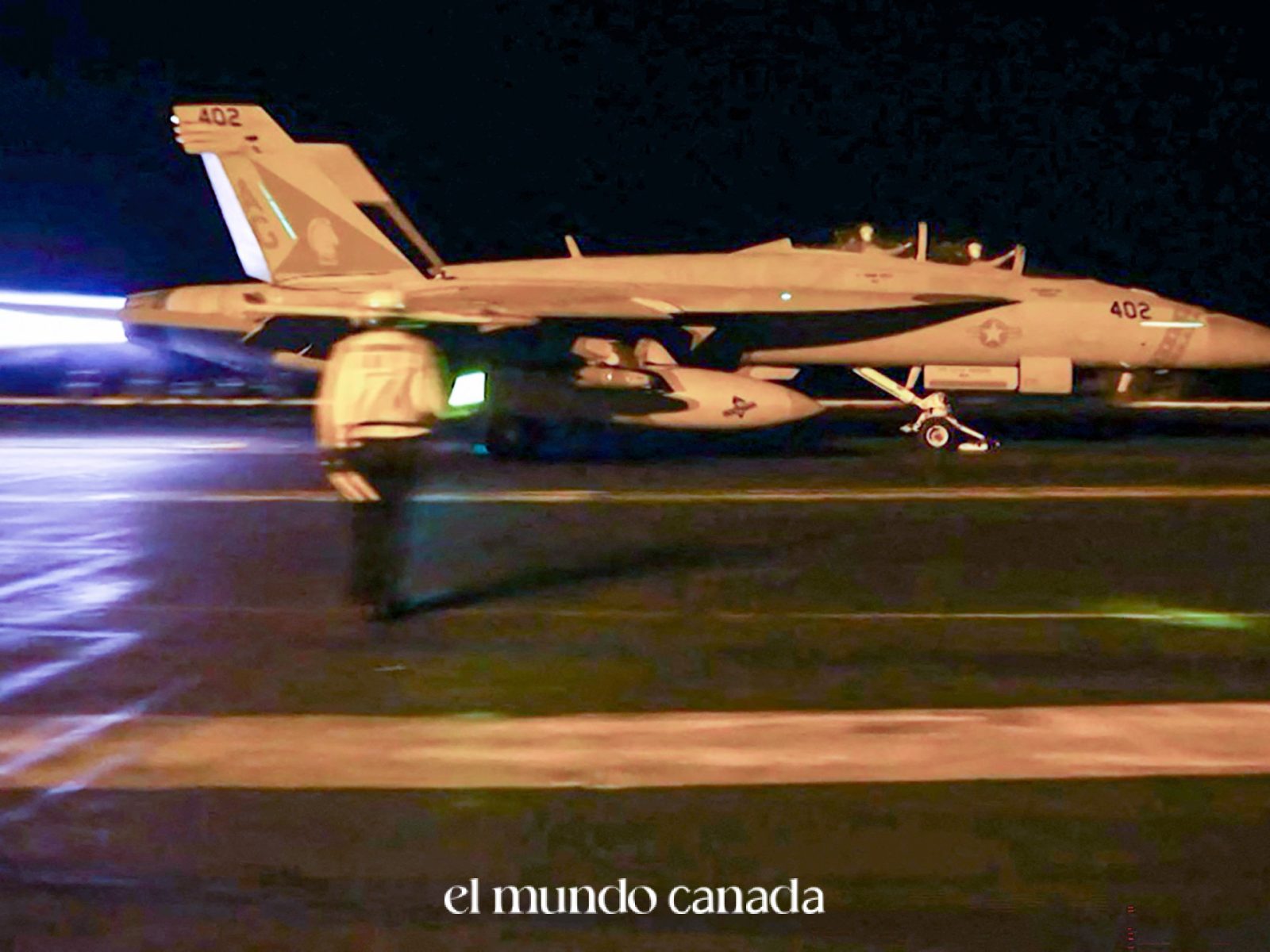
A Pentagon watchdog report released on September 14, 2026 has unveiled the staggering toll of the US-Iran conflict, revealing that Washington lost dozens of aircraft, including at least 30 MQ-9 Reaper drones, while hundreds of buildings and military structures were damaged or destroyed by Iranian attacks. The disclosure marks the first official accounting of American losses in what has become the most significant military confrontation in the Middle East in decades.
The Department of Defense inspector general report covers the period from February 28 to June 30, offering a sobering picture that contradicts the administration’s more optimistic public statements. For Canadians of Latin American descent with family connections to regions affected by global oil markets and geopolitical instability, these revelations carry significant economic implications.
War Costs Reach Billions
According to the Pentagon’s mandatory congressional report, Operation Epic Fury has cost American taxpayers an estimated $33 billion during the four-month period analyzed. Of that figure, approximately $22 billion was spent on expended munitions alone.
The report also acknowledges critical supply chain challenges. Pentagon officials confirmed the US is running short on its munition stockpile and facing significant bottlenecks in production. This admission directly contradicts President Donald Trump’s repeated assertions.
“The US is producing more Exquisite and Elite Weapons than at any time in our History.”
Trump had previously claimed the United States has virtually unlimited ammunition following media reports of shortages. The inspector general’s findings suggest a different reality on the ground.
US Personnel Casualties
The human cost of the conflict has been significant. The Defense Department confirmed that at least 11 US military personnel were killed in action, while an additional seven died in non-hostile events during the war period.
The casualties occurred across multiple locations throughout the Gulf region. On March 1, six service members were killed at Kuwait’s Port Shuaiba, with one additional death in Saudi Arabia the same day. The attacks continued throughout the spring and summer months.
Three personnel lost their lives at Jordan’s Muwaffaq al-Salti airbase, also known as the Al Azraq base, on July 17. Another service member was killed at Iraq’s Erbil airbase on July 19 during Iranian strikes.
Beyond combat deaths, accidents claimed additional lives. Six personnel died when a KC-135 aerial refueling tanker crashed in Iraq on March 12. Another service member was killed when an MH-60S helicopter went down in the Arabian Sea on July 1.
Perhaps most alarming, the report documented that at least 417 US military personnel were wounded in Iranian attacks through June 30, suggesting the scale of combat has been far more intense than publicly acknowledged.
Aircraft Losses Detailed
The Pentagon’s accounting of aircraft losses reveals extensive damage to America’s air combat capabilities. The losses span everything from front-line fighters to support aircraft and unmanned systems.
Among the most significant losses were F-15E Strike Eagles. At least four of these twin-seat fighter jets, valued at approximately $30 million each, were destroyed. Three of these aircraft were shot down by friendly fire over Kuwait on March 1, with a fourth lost during combat operations over Iran in April. All aircrews were recovered.
The conflict also damaged America’s most advanced stealth technology. At least one F-35A, the US military’s prized stealth multirole fighter designed to penetrate heavily defended airspace, sustained damage from Iranian fire in March.
Additionally, at least one A-10 Thunderbolt, the heavily armored ground-attack aircraft known for its tank-killing capabilities, was damaged during operations.
Drone Fleet Devastated
The report confirms that unmanned aerial systems bore the brunt of Iranian counterattacks. The loss of at least 30 MQ-9 Reaper drones represents a significant blow to American surveillance and strike capabilities in the region.
The Reaper drones serve as the backbone of US remote warfare operations, capable of conducting both reconnaissance and precision strikes. Each unit costs approximately $32 million, putting the drone losses alone in the range of nearly one billion dollars.
These losses of unmanned aircraft explain part of the massive munitions expenditure reported by the Pentagon, as the US worked to maintain operational tempo despite attrition to its aerial assets.
Infrastructure Damage Extensive
Beyond aircraft losses, hundreds of buildings and structures used by US forces were damaged or destroyed throughout the conflict zone. The damage spans multiple countries across the Gulf region, including facilities in Saudi Arabia, Kuwait, Jordan, and Iraq.
One notable site of damage was Prince Sultan Air Base in Saudi Arabia, where a US Boeing E-3 Sentry airborne warning and control aircraft was damaged during an Iranian strike on March 29. The E-3 Sentry serves as a flying command center, and its loss or damage significantly impacts battlefield coordination capabilities.
Throughout the war, Gulf countries and Washington had consistently stated that incoming Iranian strikes were being intercepted and thwarted. The Pentagon report now reveals these defensive efforts were far less successful than claimed, with losses running into millions of dollars.
Strait of Hormuz Crisis Continues
The geopolitical situation remains dire as the US and Iran find themselves locked in a diplomatic deadlock. The Strait of Hormuz, through which approximately 20 percent of global oil passes, remains almost entirely blocked.
For Canadians, particularly those with business interests or family in Latin American countries dependent on oil imports, this blockade has contributed to sustained high energy prices. The economic ripple effects continue to impact everything from transportation costs to heating bills across North America.
The conflict began with coordinated US-Israel attacks on Iran in late February. Since then, Tehran has routinely bombed US bases and assets throughout the Gulf region, demonstrating capabilities that clearly exceeded Western intelligence assessments.
What This Means for Canada
While Canada is not directly involved in the conflict, the war’s economic implications affect all Canadians. Energy prices remain elevated due to the Strait of Hormuz blockade, impacting household budgets across the country.
Latin American communities in Canada with family connections to oil-producing nations are watching the situation closely. Countries like Mexico, Venezuela, and Colombia have seen their strategic importance increase as alternative energy suppliers during the Gulf crisis.
Canadian defense analysts note that the conflict provides sobering lessons about modern warfare capabilities, particularly regarding drone technology and missile defense systems.
How many US aircraft were lost in the Iran conflict?
According to the Pentagon inspector general report, the US lost dozens of aircraft including at least 30 MQ-9 Reaper drones, four F-15E fighter jets, and sustained damage to at least one F-35A stealth fighter and one A-10 ground-attack aircraft during operations from February 28 to June 30, 2026.
What is the total cost of the US-Iran war so far?
The Pentagon report indicates the war cost $33 billion from February 28 to June 30, 2026. Of that total, approximately $22 billion was spent on expended munitions during Operation Epic Fury.
How many US personnel were killed in the conflict?
The Defense Department reported at least 11 US military personnel were killed in action, with an additional seven deaths in non-hostile events. At least 417 service members were wounded in Iranian attacks through June 30.
The Pentagon report was submitted to the US Congress as a mandatory accounting of military operations. Diplomatic efforts to resolve the conflict remain stalled as of September 15, 2026, with no breakthrough expected in immediate negotiations. The Strait of Hormuz blockade continues to disrupt global oil supplies, with shipping companies reporting that normal traffic may not resume until formal ceasefire agreements are reached.
