


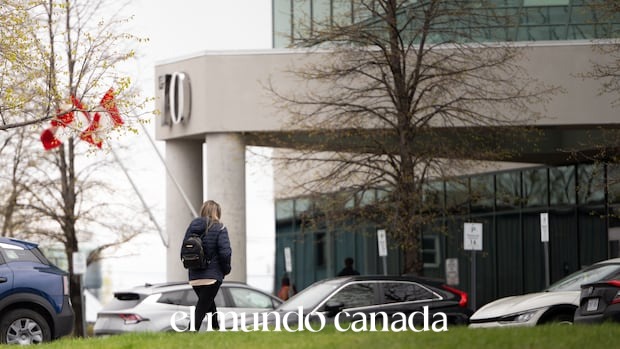
The era of flexible hot-desking is ending for most federal public servants as the Canadian government prepares to reinstate assigned seating across its workforce. This significant policy shift accompanies the expanded return-to-office mandate requiring employees to work on-site four days per week starting in September 2025.
The Treasury Board of Canada Secretariat confirmed that permanent workstations will replace the hybrid-friendly shared desk arrangements that became commonplace during the pandemic years. This change affects approximately 280,000 public service employees and signals a definitive move away from the workplace flexibility that defined federal offices since 2020.
What the New Assigned Seating Policy Means
Permanent Workstations Replace Hot-Desking
Under the updated workplace guidelines, most federal employees will receive dedicated desks rather than booking shared spaces daily. The hot-desking model, introduced to accommodate reduced in-office attendance during hybrid work arrangements, will be phased out for the majority of the workforce.
Government officials explained that the shift back to assigned seating aligns with the increased on-site presence requirements. When employees worked in offices only two or three days weekly, shared desks made practical and financial sense. With the four-day mandate, permanent workstations become more efficient.
The change means employees will once again have personal workspace to store belongings, customize their environment, and establish consistent routines. However, it also eliminates the flexibility some workers appreciated about choosing different locations based on daily tasks or team collaboration needs.
Timeline and Implementation Details
The return-to-office expansion takes effect September 2025, with assigned seating rolling out simultaneously across most departments. Individual departments retain some discretion over implementation specifics, but the overall direction remains consistent government-wide.
Treasury Board has directed departments to assess their real estate footprint and workspace configurations to accommodate the increased daily occupancy. Some offices may require furniture adjustments or layout modifications to provide sufficient permanent desks.
Why the Government Is Making This Change
Alignment with Four-Day In-Office Requirements
The primary driver behind reinstating assigned seating connects directly to the RTO mandate expansion. Government leadership argues that when employees spend four days weekly in physical offices, dedicated workspaces improve productivity and workplace experience.
Officials noted that hot-desking created friction for employees who struggled to find available desks during peak attendance days. Assigned seating eliminates this daily uncertainty and allows workers to focus immediately upon arrival rather than hunting for workspace.
Workplace Culture and Collaboration Goals
Beyond logistics, the government frames this policy as supporting workplace culture rebuilding efforts. Permanent seating arrangements encourage stronger relationships between nearby colleagues and foster natural collaboration opportunities.
Senior officials have emphasized that in-person work delivers benefits that remote arrangements cannot fully replicate. Assigned seating reinforces this philosophy by creating stable team environments where employees interact consistently with the same coworkers.
Public Servant Reactions and Union Response
Mixed Feelings Among Federal Workers
Federal employees have expressed divided opinions about the assigned seating return. Some welcome the stability and personalization options that dedicated desks provide. Others view the change as another step backward from the workplace flexibility gains achieved during the pandemic.
Workers who appreciated hot-desking’s variety express disappointment at losing the ability to choose optimal locations for different tasks. Parents and caregivers who valued hybrid flexibility see assigned seating as symbolic of diminishing accommodation for diverse work-life needs.
Union Concerns and Ongoing Negotiations
The Public Service Alliance of Canada and other federal unions continue challenging various aspects of the return-to-office mandate. Union representatives argue that the government has not adequately demonstrated why increased in-person requirements benefit either employees or service delivery.
Labor organizations question whether sufficient workspace exists across all federal locations to provide assigned seating for employees now required on-site four days weekly. They have called for transparent data about office capacity and renovation plans.
Some unions also raise accessibility concerns, emphasizing that workspace assignments must accommodate employees with disabilities and those requiring specific ergonomic arrangements.
Practical Implications for Federal Workplaces
Real Estate and Infrastructure Considerations
The policy shift creates significant real estate challenges for the federal government. During peak hybrid work periods, many departments reduced their physical footprints or redesigned spaces for hot-desking efficiency.
Reversing this approach requires substantial investment in furniture, technology infrastructure, and potentially additional leased space. The government has not released detailed cost projections for these workplace modifications.
Some departments may face longer implementation timelines if their current facilities cannot accommodate assigned seating for all employees immediately. Temporary arrangements might bridge gaps while permanent solutions develop.
Technology and Equipment Adjustments
Assigned seating simplifies certain technology deployments while complicating others. Employees with dedicated desks can use personalized equipment setups, including monitors, keyboards, and ergonomic accessories tailored to individual needs.
However, departments must ensure each workstation meets technology standards and security requirements. The hot-desking model allowed technology investments to concentrate on fewer shared stations; assigned seating distributes these needs across more locations.
Looking Ahead: September 2025 and Beyond
Preparation Steps for Federal Employees
Workers should anticipate receiving workspace assignments from their departments before the September implementation date. Employees with specific accommodation needs should proactively communicate requirements to ensure appropriate desk assignments.
The transition period may involve temporary disruptions as offices reconfigure. Flexibility and patience will help smooth the adjustment process for all involved.
Broader Implications for Hybrid Work Policies
This policy development reflects a broader governmental stance that in-person work delivers irreplaceable value for public service delivery and organizational effectiveness. The assigned seating return symbolizes commitment to rebuilding traditional workplace structures.
Whether this approach achieves stated goals remains to be seen. The federal government’s experience will likely influence private sector employers also reconsidering their post-pandemic workplace arrangements.
