


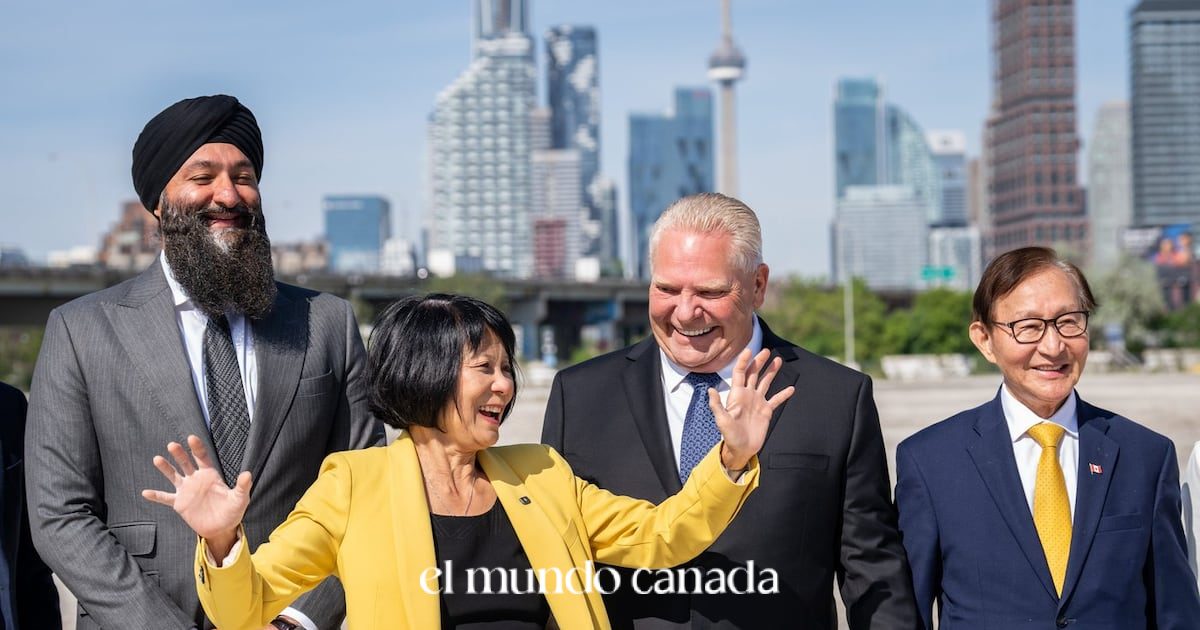
Ontario Premier Doug Ford declared his support for Toronto Mayor Olivia Chow on September 16, 2026, marking a dramatic reversal from his 2023 prediction that her election would be an “unmitigated disaster.” The announcement came during a joint press conference at a new Sanofi vaccine manufacturing facility in Toronto, where Ford stopped short of a formal endorsement but made his backing unmistakably clear.
When asked about endorsements in the upcoming mayoral race, Ford praised his working relationship with Chow and highlighted the provincial government’s financial support for the city. The premier pointed to over $9 billion in funding provided to Toronto as evidence of the productive partnership between the provincial and municipal governments.
Ford Tells Voters to Read Between the Lines
The premier’s comments left little room for interpretation despite his refusal to make an explicit endorsement. Ford described his relationship with Chow as “phenomenal” and indicated the provincial government would continue its support for her administration.
“The mayor and I have a phenomenal relationship. We’ve given the city of Toronto more money than they’ve ever seen in their lives, over $9 billion. We’re going to continue supporting the mayor. She’s doing an incredible job. So, read between the lines.”
This statement represents a significant departure from Ford’s previous position of staying out of the Toronto mayoral race entirely. The premier had earlier indicated he would not involve himself in municipal politics, making his public support for Chow all the more notable for political observers in the region.
A Dramatic Reversal from 2023 Criticism
The current alignment between Ford and Chow stands in stark contrast to the premier’s rhetoric during the 2023 mayoral byelection. At that time, Ford was actively campaigning for former Toronto police chief Mark Saunders and issued dire warnings about what a Chow victory would mean for the city.
During that campaign, the premier compared Chow unfavorably to former mayor David Miller, suggesting she would make him “look like a fiscal conservative.” Ford warned that her election would lead to unprecedented tax increases and cause companies to flee the city. These warnings proved central to his argument against her candidacy.
However, after Chow won that mayoral race, Ford quickly changed his approach. The pair met the day following the vote, and the premier dismissed his earlier attacks as typical campaign rhetoric. He acknowledged that Chow was “actually quite a nice person” and expressed optimism about finding common ground.
Working Relationship Develops Despite Disagreements
Since Chow took office, the premier and mayor have collaborated on numerous issues affecting Toronto residents. Their partnership has demonstrated that political opponents can work together productively, even when they come from different ideological backgrounds and have publicly clashed in the past.
The relationship has not been without friction, however. Ford and Chow have disagreed over provincial incursions on speed cameras and bike lanes, issues where the provincial government has asserted authority over municipal decisions. Despite these policy conflicts, Ford has consistently maintained that their disagreements are not personal in nature.
Earlier in 2026, Ford sharply criticized a planned City of Toronto pilot project to open four city-run grocery stores. The premier called it “the craziest idea” he had ever heard and labeled the initiative as “socialism.” Yet even this strong criticism ended with an affectionate note toward the mayor.
“She wants city-run grocery stores? You’d be subsidizing it huge, because it’s just, it’s crazy. That’s socialism. I love you, mayor.”
This ability to disagree publicly while maintaining a functional working relationship has become a hallmark of the Ford-Chow dynamic. For residents of Toronto and the broader Ontario region, the cooperation between these two levels of government has tangible implications for infrastructure, transit, and social services.
Chow Faces Competitive Field in Re-election Bid
Mayor Chow is seeking re-election against a crowded field of approximately 50 candidates. Among her most prominent challengers are Brad Bradford and Chris Alexander, who are competing for the opportunity to lead Canada’s largest city. The provincial premier’s support could prove influential in this competitive race.
The $9 billion in provincial funding that Ford cited represents a substantial investment in Toronto’s infrastructure and services. This financial backing has become a central talking point for both Ford and Chow as they highlight their productive partnership. For voters evaluating candidates, the ability to secure provincial cooperation and funding may weigh heavily in their decision-making.
Political dynamics in Canada continue to evolve, with traditional partisan boundaries sometimes giving way to practical cooperation. Similar shifts have been observed in other policy areas, including discussions around drug policy affecting Canada and debates over provincial autonomy in Alberta.
What This Means for Toronto Residents
For the Latin community in Canada and all Toronto residents, the Ford-Chow partnership signals continued provincial investment in the city’s development. The over $9 billion in funding has supported various municipal initiatives, from transit expansion to housing programs that affect communities across the metropolitan area.
The premier’s willingness to work with a mayor from a different political tradition suggests that pragmatism may continue to define Ontario-Toronto relations regardless of the mayoral election outcome. However, Ford’s clear preference for Chow indicates the established working relationship provides value that might not transfer automatically to a new administration.
Residents interested in the mayoral race should pay attention to how candidates position themselves regarding provincial relations. The ability to secure funding and cooperation from Queen’s Park has proven essential for implementing major city initiatives, making this a critical consideration for voters evaluating the approximately 50 candidates on the ballot.
The Sanofi vaccine manufacturing facility where Ford and Chow made their joint appearance represents the type of investment both leaders seek to attract to Toronto. Such facilities bring jobs and economic activity to the region while strengthening Canada’s capacity in critical industries like pharmaceutical manufacturing.
The Toronto mayoral election will determine whether the productive partnership between Ford and Chow continues or whether residents choose a new direction for city leadership. With Brad Bradford, Chris Alexander, and dozens of other candidates vying for the position, voters have significant choices to consider as election day approaches.
Why did Doug Ford change his opinion about Olivia Chow?
After Chow won the 2023 mayoral byelection, Ford met with her the following day and attributed his earlier criticism to typical campaign rhetoric. The two have since developed what Ford describes as a “phenomenal relationship” based on practical cooperation, despite their different political backgrounds.
How much funding has Ontario provided to Toronto under this partnership?
Premier Ford stated that the provincial government has provided over $9 billion to the City of Toronto, which he described as more money than the city has “ever seen in their lives.” This funding supports various municipal programs and infrastructure projects.
Who are Olivia Chow’s main opponents in the mayoral race?
Mayor Chow faces a packed field of approximately 50 candidates seeking to become Toronto’s next mayor. Among the most prominent challengers are Brad Bradford and Chris Alexander, who are competing for the position in this crowded race.
What issues have Ford and Chow disagreed on?
Despite their overall cooperation, Ford and Chow have clashed over provincial decisions affecting speed cameras and bike lanes in Toronto. Ford also strongly criticized Chow’s plan for four city-run grocery stores, calling it “the craziest idea” and labeling it “socialism.”
📘 Follow El Mundo Canada on our social networks: Facebook | Twitter | Instagram
