


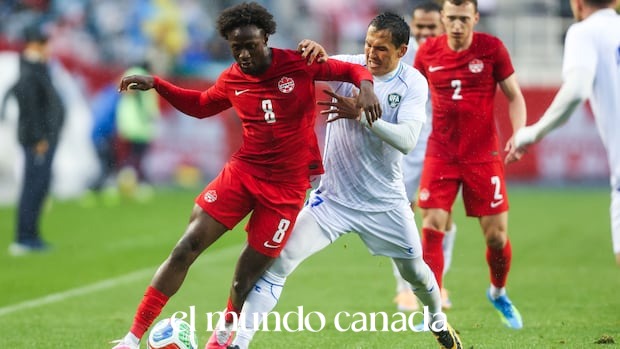
The Canadian men’s national soccer team delivered a confident performance on home soil, securing a 2-0 victory over Uzbekistan in a crucial Canada soccer World Cup friendly match in Edmonton. The Sunday evening contest at Commonwealth Stadium served as vital preparation ahead of the 2026 FIFA World Cup, which Canada will co-host alongside the United States and Mexico.
With the tournament now less than a year away, head coach Jesse Marsch continues to fine-tune his squad’s chemistry and tactical approach. This friendly win provides momentum as Canada builds toward its first World Cup appearance on home soil and only its third World Cup qualification in history.
Dominant First Half Sets the Tone
Laryea Opens the Scoring
Canada wasted little time asserting control over the match. Richie Laryea broke the deadlock in the 19th minute, capitalizing on a well-constructed attacking sequence. The Toronto FC defender-turned-wingback showcased his offensive capabilities, timing his run perfectly to slot the ball past the Uzbekistan goalkeeper.
The goal energized the home crowd and set the tempo for Canada’s attacking intent throughout the first half. Marsch’s tactical setup allowed the fullbacks to push high, creating numerical advantages in wide areas that Uzbekistan struggled to contain.
The Canadian midfield dominated possession, with players circulating the ball efficiently and probing for openings. This control prevented Uzbekistan from establishing any sustained attacking rhythm during the opening 45 minutes.
David Doubles the Lead
Jonathan David extended Canada’s advantage just before halftime, scoring in the 45th minute to send the home supporters into the break with plenty to celebrate. The Lille striker demonstrated his clinical finishing ability, continuing his impressive scoring form for the national team.
David’s goal marked another chapter in his remarkable international career. The 25-year-old forward has emerged as Canada’s most reliable goal scorer, and his connection with the creative players around him continues to develop under Marsch’s system.
Second Half Tactical Adjustments
Canada Manages the Game
With a comfortable two-goal cushion, Canada adopted a more measured approach in the second half. Marsch used the opportunity to rotate his squad, giving valuable minutes to players on the fringes of the starting lineup while protecting key players from unnecessary fatigue or injury risk.
The tactical shift demonstrated Canada’s growing maturity as a team. Rather than chasing additional goals recklessly, the squad prioritized defensive organization and possession management. This game intelligence will prove essential during the pressurized environment of World Cup group stage matches.
Uzbekistan showed more ambition after the interval, pushing players forward in search of a response. However, Canada’s backline remained resolute, limiting the visitors to half-chances and long-range efforts that posed minimal threat.
Defensive Solidity Impresses
The clean sheet represented a significant positive for Marsch and his coaching staff. Defensive consistency has been an area of focus during this preparation phase, and the performance against Uzbekistan suggested progress in that department.
Canada’s center-back pairing communicated effectively throughout the match, organizing the defensive line and winning aerial duels against Uzbekistan’s physical forwards. The goalkeeper, though rarely tested severely, commanded the penalty area confidently when called upon.
World Cup 2026 Preparation Continues
Building Toward the Tournament
This victory forms part of an extensive preparation schedule as Canada readies itself for the 2026 FIFA World Cup. As co-hosts, Canada automatically qualified for the tournament, allowing Marsch to focus entirely on squad development and tactical refinement rather than navigating qualification stress.
The friendly against Uzbekistan provided useful data points for the coaching staff. Marsch can now assess which players performed under pressure, how tactical instructions translated onto the pitch, and where improvements remain necessary.
Canada’s World Cup group opponents have not yet been determined, with the draw scheduled for later this year. However, matches against varied opposition like Uzbekistan help prepare the squad for different playing styles and tactical challenges they may encounter during the tournament.
Edmonton Embraces the National Team
The Edmonton faithful created an electric atmosphere at Commonwealth Stadium, demonstrating the passion Canadian soccer fans hold for their national team. The city has become a reliable venue for important home matches, with supporters consistently filling seats and generating vocal support.
This connection between the team and its fanbase could prove valuable during the World Cup. Canada will play group stage matches across North American venues, and home-crowd advantage may influence results in tight contests.
The growth of soccer culture across Canada has accelerated dramatically in recent years. Success at the 2022 World Cup in Qatar, where Canada competed for the first time since 1986, sparked increased interest nationwide. The 2026 tournament represents an opportunity to cement soccer’s place in the Canadian sporting landscape permanently.
Key Takeaways and What Comes Next
Player Performances Worth Noting
Several players enhanced their World Cup roster claims with strong individual displays. Laryea’s goal and overall attacking contribution highlighted his versatility, while David reinforced his status as the team’s primary scoring threat.
The midfield group controlled proceedings effectively, suggesting Marsch has identified combinations that balance creativity with defensive responsibility. Competition for starting positions remains fierce, which benefits the overall squad depth.
Remaining Preparation Schedule
Canada will continue scheduling friendlies against quality opposition throughout the coming months. These matches serve dual purposes: building team cohesion while allowing Marsch to evaluate players competing for roster spots.
The coaching staff faces difficult decisions ahead of finalizing the World Cup squad. Depth across multiple positions gives Marsch options but also creates selection headaches. Performances in remaining friendlies will influence those choices significantly.
Canada’s 2-0 victory over Uzbekistan in Edmonton demonstrated continued progress under Jesse Marsch’s leadership. Goals from Richie Laryea and Jonathan David secured the result, while the clean sheet highlighted defensive improvements as the team prepares for the 2026 FIFA World Cup on home soil.
