


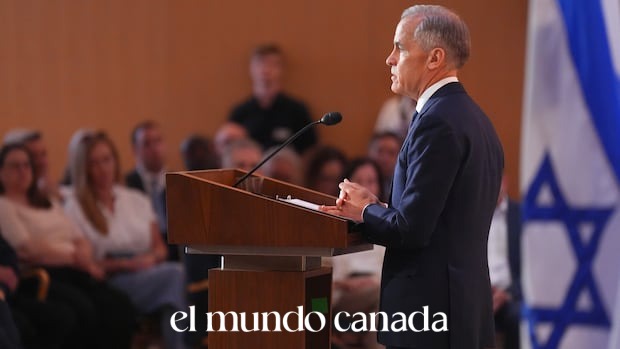
Prime Minister Mark Carney delivered a forceful address condemning the rise of antisemitism in Canada, declaring that the nation’s civic compact is failing Jewish Canadians. The Carney antisemitism speech, delivered at a significant moment in Canadian political discourse, marks one of the most direct acknowledgments by a sitting prime minister of the challenges facing the Jewish community.
Carney’s remarks come amid growing concerns about hate crimes targeting Jewish Canadians and ongoing tensions surrounding protests and incidents on university campuses across the country.
Prime Minister Addresses Rising Hate Crimes
In his speech, Carney outlined what he described as a troubling pattern of antisemitic incidents that have left many Jewish Canadians feeling unsafe in their own communities. The prime minister emphasized that combating hatred against Jewish people requires more than rhetoric—it demands concrete government action.
“When Jewish students feel unsafe on campus, when synagogues require increased security, when families hide their identity in public spaces, we have failed in our most basic obligations,” Carney stated during the address.
The speech acknowledged statistics showing a significant increase in reported antisemitic incidents across Canada in recent years.
Canada’s Civic Compact Under Scrutiny
Carney’s use of the phrase “civic compact” carries particular weight in the Canadian political context. The term refers to the implicit agreement between a democratic government and its citizens—that the state will protect fundamental rights and ensure safety for all communities.
By declaring this compact broken for Jewish Canadians, the prime minister signaled a willingness to address what many advocacy groups have long argued: that antisemitism has been inadequately addressed by previous governments.
Jewish community leaders responded to the speech with cautious optimism. Organizations representing Canadian Jews have pushed for years for stronger government responses to rising hatred.
University Campus Tensions Highlighted
A significant portion of Carney’s address focused on the situation at Canadian universities, where protests and counter-protests have created hostile environments for some Jewish students.
The prime minister referenced specific incidents without naming institutions directly, calling on university administrators to balance free speech protections with their duty to maintain safe learning environments for all students.
“Academic freedom does not include the freedom to intimidate, harass, or threaten students based on their identity or heritage,” Carney emphasized.
Campus antisemitism has become a flashpoint issue across North America, with similar debates occurring at institutions in the United States and Europe.
Policy Commitments and Government Response
Beyond the rhetorical elements of the speech, Carney outlined several policy directions his government intends to pursue:
- Enhanced hate crime enforcement through increased resources for police services
- Educational initiatives aimed at combating antisemitism in schools
- Stronger penalties for those convicted of hate-motivated crimes
- Support for community security programs protecting vulnerable institutions
The prime minister stopped short of announcing specific funding amounts or legislative timelines, suggesting detailed announcements would follow in coming weeks.
Critics from opposition parties responded with mixed reviews. Some praised the speech’s tone while questioning whether the government would follow through on its commitments.
Historical Context of Jewish Life in Canada
Carney’s speech also touched on the historical experiences of Jewish Canadians, acknowledging both the community’s contributions to national life and past instances of discrimination, including the infamous “none is too many” immigration policy that turned away Jewish refugees fleeing Nazi persecution.
This historical acknowledgment served to contextualize current challenges within a longer pattern of antisemitism that has never been fully eradicated from Canadian society.
“We cannot address today’s hatred without understanding yesterday’s failures,” the prime minister noted, drawing connections between historical persecution and contemporary threats.
Community Reactions and Next Steps
Jewish advocacy organizations largely welcomed the prime minister’s remarks while emphasizing that words must translate into action. Representatives from B’nai Brith Canada and the Centre for Israel and Jewish Affairs issued statements acknowledging the speech’s significance.
“This represents an important acknowledgment of what our community has been experiencing,” said one community leader, speaking on condition of anonymity pending official organizational responses.
However, some voices within the Jewish community expressed skepticism, noting that previous government promises have not always materialized into meaningful change.
The speech also drew attention from international observers, with Jewish organizations in other countries watching Canada’s response as a potential model for addressing antisemitism in democratic societies.
Moving Forward on Combating Hatred
As Canada continues grappling with rising antisemitism and other forms of hatred, Carney’s speech represents a significant moment in the national conversation. Whether it marks a genuine turning point depends largely on the government’s follow-through in coming months.
The prime minister concluded his remarks with a call for all Canadians to participate in combating antisemitism, emphasizing that protecting minority communities strengthens democracy for everyone.
For Jewish Canadians who have felt increasingly vulnerable, the speech offers hope—tempered by the understanding that meaningful change requires sustained commitment beyond a single address.
