


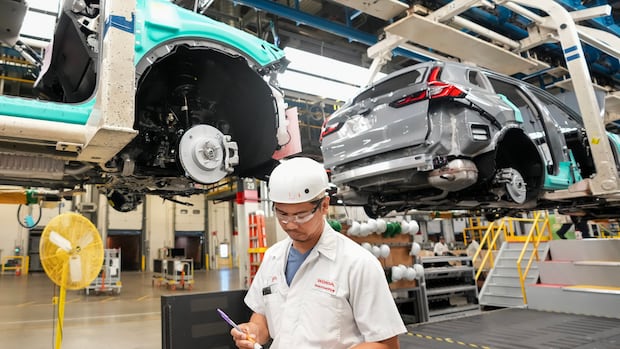
Honda has indefinitely suspended construction of its massive electric vehicle plant in Ontario, putting a $15 billion manufacturing hub on hold amid escalating trade tensions between Canada and the United States. The Japanese automaker announced the decision on May 16, 2024, citing ongoing uncertainty surrounding U.S. tariffs as the primary factor behind the pause.
This development marks a significant blow to Canada’s electric vehicle ambitions and raises questions about the future of automotive manufacturing in the country. The project, which represented one of the largest automotive investments in Canadian history, was expected to create thousands of jobs and position Ontario as a major player in the North American EV market.
Why Honda Paused the Ontario EV Project
Tariff Uncertainty Drives Decision
Honda’s decision stems directly from the unpredictable trade environment created by U.S. tariff policies. The company stated that it cannot move forward with such a substantial investment without clarity on the tariff situation affecting cross-border automotive trade.
The automaker had originally announced plans to build a comprehensive electric vehicle manufacturing facility in Alliston, Ontario. The project included battery production capabilities and was designed to produce next-generation electric vehicles for the North American market.
Company executives emphasized that the suspension is indefinite rather than permanent. However, they provided no timeline for when construction might resume, leaving workers, suppliers, and government officials in limbo.
Impact on Canadian Auto Industry
The suspension sends shockwaves through Canada’s automotive sector, which has worked aggressively to attract EV manufacturing investments. Ontario Premier Doug Ford had championed the Honda project as a cornerstone of the province’s economic future.
Industry analysts note that this decision could trigger a domino effect. Other automakers considering Canadian investments may now reassess their plans given the trade uncertainty.
The project was expected to generate approximately 4,000 direct jobs during the construction phase and create thousands of permanent manufacturing positions once operational. Local communities had already begun preparing for the economic boom the facility would bring.
The Broader Context of Auto Industry Trade Wars
U.S.-Canada Automotive Trade Relations
The Honda suspension highlights the fragile nature of cross-border automotive manufacturing in North America. The United States, Canada, and Mexico have maintained an integrated automotive supply chain for decades, but recent tariff threats have disrupted this relationship.
U.S. tariffs on imported vehicles and auto parts create significant challenges for manufacturers operating in Canada. Even vehicles assembled in Canada often cross the border multiple times during production, making them vulnerable to cumulative tariff costs.
Honda’s Alliston facility already produces vehicles for the North American market. The company must now weigh whether expanding Canadian operations makes financial sense given the current trade climate.
Electric Vehicle Market Pressures
Beyond tariff concerns, the EV industry faces broader headwinds. Consumer adoption of electric vehicles has slowed in some markets, and several automakers have scaled back their electrification timelines.
Honda itself has adjusted its global EV strategy multiple times in recent years. The company initially partnered with General Motors on electric vehicle development but has since pursued independent projects as well.
The Ontario plant was intended to help Honda compete with rivals like Tesla, Ford, and emerging Chinese manufacturers in the increasingly crowded EV space.
Government Response and Economic Implications
Federal and Provincial Reactions
Canadian government officials expressed disappointment at Honda’s announcement while emphasizing their commitment to resolving trade disputes with the United States. Federal Industry Minister François-Philippe Champagne called the suspension “unfortunate” and pledged continued efforts to provide certainty for investors.
The Canadian government had offered substantial incentives to secure the Honda investment, including tax credits and infrastructure support. The fate of these commitments remains unclear with the project now on hold.
Ontario’s provincial government faces particular pressure, having staked significant political capital on automotive investments. The province has positioned itself as a hub for EV battery production and electric vehicle assembly.
Worker and Community Impact
Communities surrounding the proposed plant site now face uncertainty. Local businesses had anticipated increased demand from construction workers and eventually from plant employees. Real estate markets in the region had already begun responding to expected population growth.
Current Honda employees in Canada also worry about job security. While the company has not announced layoffs related to the suspension, prolonged uncertainty could affect existing operations.
Labor unions representing automotive workers called for urgent government action to resolve trade disputes and protect Canadian manufacturing jobs.
What Comes Next for Honda and Canadian EV Manufacturing
Potential Paths Forward
Several scenarios could unfold in the coming months. If the United States and Canada reach a trade agreement providing tariff exemptions for automotive products, Honda might quickly restart construction.
Alternatively, Honda could redirect investment to U.S. facilities, where tariff concerns would not apply. The company operates multiple manufacturing plants in states like Ohio and Indiana.
A third possibility involves Honda scaling back the Ontario project’s scope rather than abandoning it entirely. The company might proceed with limited investment while awaiting greater trade clarity.
Implications for North American EV Strategy
Honda’s decision reflects the challenging environment facing all automakers attempting to build North American EV supply chains. Companies must balance proximity to customers, access to skilled labor, government incentives, and trade policy risks.
The suspension may accelerate discussions about automotive trade policy at the highest levels of government. Both Canadian and American officials recognize that a stable automotive sector benefits both economies.
Other automakers, including Stellantis and Ford, have also announced adjustments to their Canadian investment plans in recent months. The industry appears to be in a holding pattern until trade policy becomes clearer.
Honda’s indefinite suspension of its $15 billion Ontario EV plant represents a significant setback for Canadian electric vehicle manufacturing ambitions. The decision underscores how trade policy uncertainty can derail even the largest industrial investments. As governments work to resolve tariff disputes, workers, communities, and investors must wait for clarity before the project can move forward.
