


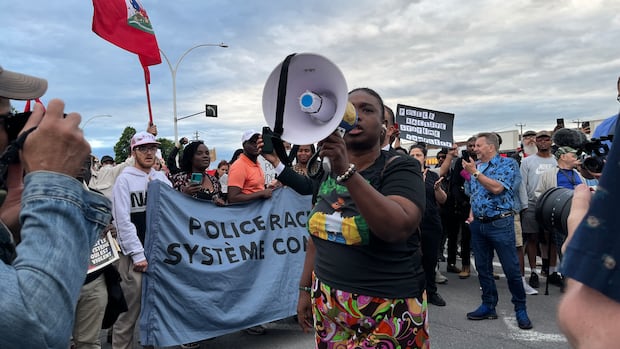
Community Members Demand Accountability After Discrimination Allegations Surface
Hundreds of demonstrators gathered outside the Montréal-Nord police station on Sunday, demanding accountability and systemic changes following serious racism allegations against officers serving the predominantly Black and immigrant community. The Montreal police racism protest marks the latest chapter in ongoing tensions between law enforcement and residents of one of the city’s most diverse neighborhoods.
The peaceful demonstration drew community activists, local residents, and civil rights advocates who called for concrete action from the Service de police de la Ville de Montréal (SPVM). Protesters carried signs demanding justice and chanted slogans highlighting their frustrations with what they describe as a pattern of discriminatory policing practices.
What Sparked the Montréal-Nord Police Demonstration
The protest stems from recent allegations of racial profiling and discriminatory behavior by officers stationed at the Montréal-Nord precinct. Community members have long voiced concerns about their interactions with local police, citing disproportionate stops, aggressive tactics, and disrespectful treatment.
Montréal-Nord has historically been home to significant Haitian, African, and Caribbean communities. Residents argue that racial profiling has created a climate of fear and mistrust that undermines public safety rather than enhancing it.
Several incidents in recent months have reignited these longstanding grievances. Community leaders point to specific encounters that they say demonstrate systemic bias within the department, though official investigations into these complaints remain ongoing.
Protesters’ Demands for Police Reform
Demonstrators presented a clear list of demands during the rally. Their calls for reform include mandatory anti-racism training for all officers, independent oversight of discrimination complaints, and greater community involvement in policing decisions.
“We are not asking for special treatment,” one organizer told the crowd. “We are demanding equal treatment and basic respect.”
Key demands from protesters include:
- Independent investigation into racism allegations
- Suspension of officers under investigation
- Community-led oversight board with real authority
- Mandatory cultural competency training
- Public release of police interaction data by race
The coalition organizing the protest includes several established civil rights organizations that have long advocated for police accountability in Quebec. They argue that internal investigations rarely produce meaningful consequences for officers accused of discrimination.
SPVM Response to Racism Allegations
The SPVM has acknowledged the community’s concerns while defending its officers and existing oversight mechanisms. Department officials stated they take all discrimination complaints seriously and investigate each allegation thoroughly.
Police representatives emphasized their commitment to serving all Montreal residents equally, regardless of background. The department pointed to recent diversity initiatives and community outreach programs as evidence of their dedication to improving relations.
However, critics argue these measures have failed to address the root causes of discriminatory policing. They contend that systemic racism requires systemic solutions, not just surface-level programming.
The police union has also weighed in, defending its members against what it characterizes as unfair generalizations. Union representatives called for patience as official investigations proceed.
Historical Context of Police-Community Tensions
The relationship between Montréal-Nord residents and local police has been strained for decades. The neighborhood gained national attention in 2008 when Fredy Villanueva, an 18-year-old of Honduran descent, was fatally shot by police during an intervention at a local park.
That incident sparked days of protests and property damage, exposing deep fractures between law enforcement and the community. Despite subsequent reform efforts, many residents feel little has fundamentally changed.
Quebec’s Human Rights Commission has previously documented concerns about racial profiling by Montreal police. Studies have shown that Black and Indigenous residents face disproportionately high rates of police stops and searches compared to white residents.
Community Leaders Call for Sustained Action
Local activists emphasized that Sunday’s demonstration represents just the beginning of their campaign. Organizers announced plans for continued pressure through public meetings, political lobbying, and additional protests if their demands go unmet.
Community solidarity was a prominent theme throughout the event. Speakers stressed the importance of unity across different immigrant and minority communities facing similar challenges with law enforcement.
Religious leaders, local politicians, and representatives from various cultural organizations addressed the crowd. Several called for municipal and provincial governments to intervene and mandate reforms that the police department has been reluctant to implement independently.
What Happens Next in Montreal’s Police Accountability Fight
The coming weeks will prove critical in determining whether this protest translates into meaningful change. Community leaders have requested meetings with SPVM leadership and Montreal city officials to discuss their demands formally.
Meanwhile, ongoing investigations into specific discrimination complaints will continue. Civil rights advocates are calling for these processes to be expedited and made more transparent to the public.
Provincial politicians have also begun weighing in on the controversy. Some have called for broader police reform legislation that would address systemic issues across Quebec, not just in Montreal.
A Community Demanding Change
The Montreal police racism protest at Montréal-Nord demonstrates that community members refuse to accept the status quo in their relationship with law enforcement. Their demands reflect broader conversations happening across North America about policing reform, racial justice, and community safety.
Whether authorities respond with substantive changes or symbolic gestures will determine the trajectory of police-community relations in this diverse neighborhood. Residents have made clear they will continue organizing until they see real accountability and meaningful reform.
